Calligrapher: A Magical Script Handwritten Font for Makers
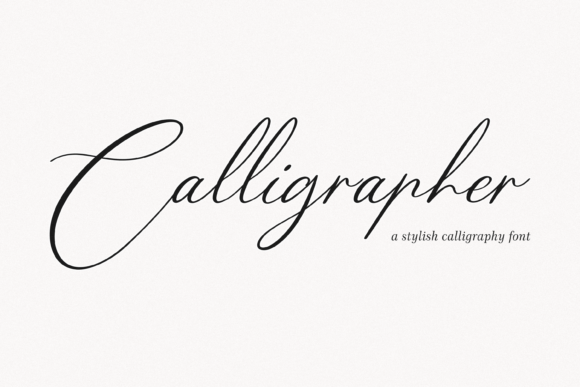
There’s that quiet moment—just after the wax cools on a new candle batch—when I open my design software and stare at a blank label template. I need something that feels personal, intentional, and quietly luxurious. That’s when I reach for Calligrapher. This isn’t just another script font—it’s a Script Handwritten typeface with genuine flow, delicate contrast, and an elegant rhythm that makes even “Soy Wax • Lavender + Vanilla” look like it was penned by hand in a sunlit studio.
Calligrapher for Candle Labels and Handmade Product Packaging
When you’re hand-pouring small-batch candles or assembling artisan soap sets, your packaging is your first impression—and Calligrapher helps it land with warmth and intention. I use it for front-label names (“Hearth & Honey”), ingredient callouts, and subtle batch numbers. Because Calligrapher is a refined Script Handwritten font—not overly ornate or fragile—it holds up beautifully at 10–14 pt on matte sticker paper. For Cricut and Silhouette users: test cut the lowercase “g” and “y” first; their graceful descenders are charming but need clean blade calibration. Pair Calligrapher with a light sans serif (like Montserrat Light) for supporting text—this keeps your Fonts pairing legible, balanced, and shelf-ready.
Calligrapher for Wedding Invitations and Elegant Branding
I designed a set of minimalist wedding stationery last spring—no florals, no foil, just texture, tone, and typography. Calligrapher carried the entire mood: soft ink-like strokes, gentle swashes on capital letters, and a natural variation in line weight that mimics real calligraphy. As a Script Handwritten font, it shines in display roles—Mr. & Mrs. Hayes, October 12, 2024, Reception to Follow. It’s not meant for full paragraphs, but that’s perfect for invitations where every word is curated. Before sending to print, I checked the included OpenType features: ligatures for “Th”, “Wh”, and “St” added polish, and the alternate capitals gave me flexibility for monogrammed envelope liners. If you're licensing Calligrapher for commercial use (as most makers do), confirm it includes full commercial font licensing—especially if you’re selling digital invitation templates or printable suites.
Calligrapher for Printable Wall Art and Planner Pages
My best-selling digital download? A set of seasonal wall quotes—“Bloom Quietly”, “Tend Your Light”, “This Space Is Sacred”. All designed in Calligrapher. Why? Because this Script Handwritten font has presence without pretense. It reads as handmade, not AI-generated. When scaled large (300+ pt), its subtle flourishes sing. At smaller sizes (24–36 pt on planner headers), it stays crisp—especially when exported as high-res PNGs or embedded in Canva templates. As a creator of Fonts-based digital products, I always verify file formats: Calligrapher comes in .OTF and .TTF, so it works seamlessly in Procreate (with font import), Adobe Suite, and free tools like DaVinci Resolve’s text generator for social previews.
Calligrapher for Instagram Captions and Social Media Graphics
You know that split-second scroll-stopping magic? It happens when your Instagram story overlay says “New Arrivals” in Calligrapher. This Script Handwritten font adds instant visual cohesion—especially against neutral backgrounds, linen textures, or soft watercolor mockups. I use it exclusively for short, emotive phrases: “Hand-Poured Daily”, “Ships in 24 Hours”, “Limited Stock”. Its elegance lifts even utilitarian messaging. Bonus: because Calligrapher avoids extreme thin strokes or tight kerning, it remains legible on mobile—even in thumbnail previews. Pair it with a clean, low-contrast sans serif for body text in carousel posts, and your feed gains rhythm, hierarchy, and quiet confidence.
Calligrapher for Boutique Tags, Tote Bags, and Seasonal Craft Designs
Last December, I screen-printed a run of linen tote bags for a local gift shop. The phrase “Made With Care” lived entirely in Calligrapher. Its organic movement softened the rigidity of fabric printing—no stiff vector outlines, no robotic uniformity. Same goes for kraft paper gift tags: I used Calligrapher for recipient names and “From: [Shop Name]”, then added a tiny sans serif for date or occasion. As a Script Handwritten font, it thrives in tactile applications—but only if you respect its scale. Avoid using it under 8 pt on physical merchandise. And always preview your SVG exports: some cutting machines misread overlapping swashes, so simplify complex alternates before exporting for vinyl or iron-on transfers.
Calligrapher for Greeting Cards and Handmade Stationery Kits
I keep a folder of Calligrapher-based greeting card layouts—birthday, sympathy, thank-you, new baby. Its gentle contrast and open letterforms make it highly readable, even in printed form on textured cotton paper. Unlike some decorative Script Handwritten fonts, Calligrapher doesn’t sacrifice clarity for charm. I use the standard weight for headlines and the lighter alternate for inside messages—creating visual breathing room. For stationery kits sold as printable PDFs, I embed Calligrapher in layered Illustrator files (with outlined fallbacks) and include clear usage notes: “Font included for personal and commercial use—no redistribution of font files.” That transparency builds trust with fellow makers who rely on reliable Fonts.
Calligrapher for DIY Projects and Creative Font Pairing
Whether you’re laser-cutting wooden signs, designing enamel pins, or mocking up mug wraps, Calligrapher brings soul to functional objects. Its Script Handwritten character works especially well with rustic, modern, or botanical themes—but it’s versatile enough for minimalist studios or vintage apothecary brands. My go-to pairing? Calligrapher for titles + Lora (a gentle serif) for body copy. Or Calligrapher + Inter (a neutral, highly legible sans) for digital product listings. Always test your pairings at actual size: what looks balanced on screen may feel unbalanced when printed at 2” tall on a tea towel tag. And remember—Calligrapher is a display font first. Let it shine where attention lives: names, quotes, dates, and declarations.